Dental Service
Complex Restorative Dentistry in Medford, OR
Complex Restorative Dentistry in Medford, OR
You may be carrying a mouth full of small problems that have quietly added up: a crown that never felt right, an old bridge, a tooth that broke off years ago, a bite that has slowly shifted. Complex restorative dentistry sorts all of that out as one connected plan instead of chasing one tooth at a time. Dr. Kaiser and the team at Pacific Rim Dental handle this care in our Medford office, and nothing gets recommended until we have a full picture of what is actually going on.
Dr. Kaiser's approach is built around saving as much of your natural tooth as possible and rebuilding in a way that works like the real thing, not just looks like it. He uses digital design, CAD/CAM milling, and 3D printing in-house, which means restorations fit more precisely and less healthy tooth structure has to be removed to make them work.
To talk through where you stand, call us at (541) 779-9059.
Key Takeaways
- Complex restorative care can bring together crowns, bridges, inlays and onlays, implant-supported restorations, dentures, and full-mouth reconstruction, all treated as one connected plan, not a series of separate fixes.
- A good treatment plan has a clear reason behind every step and every decision. If something is being recommended, you will know why.
- Most plans are phased over time, so you are never left mid-treatment in a worse spot than when you came in.
- Cost depends on what your mouth actually needs. You will see a detailed estimate before anything begins, so there are no surprises.
- Everything starts with a thorough exam. Dr. Kaiser looks at the full picture first before recommending a single procedure.
How It Works
1. A thorough first appointment: X-rays, photos, and scans
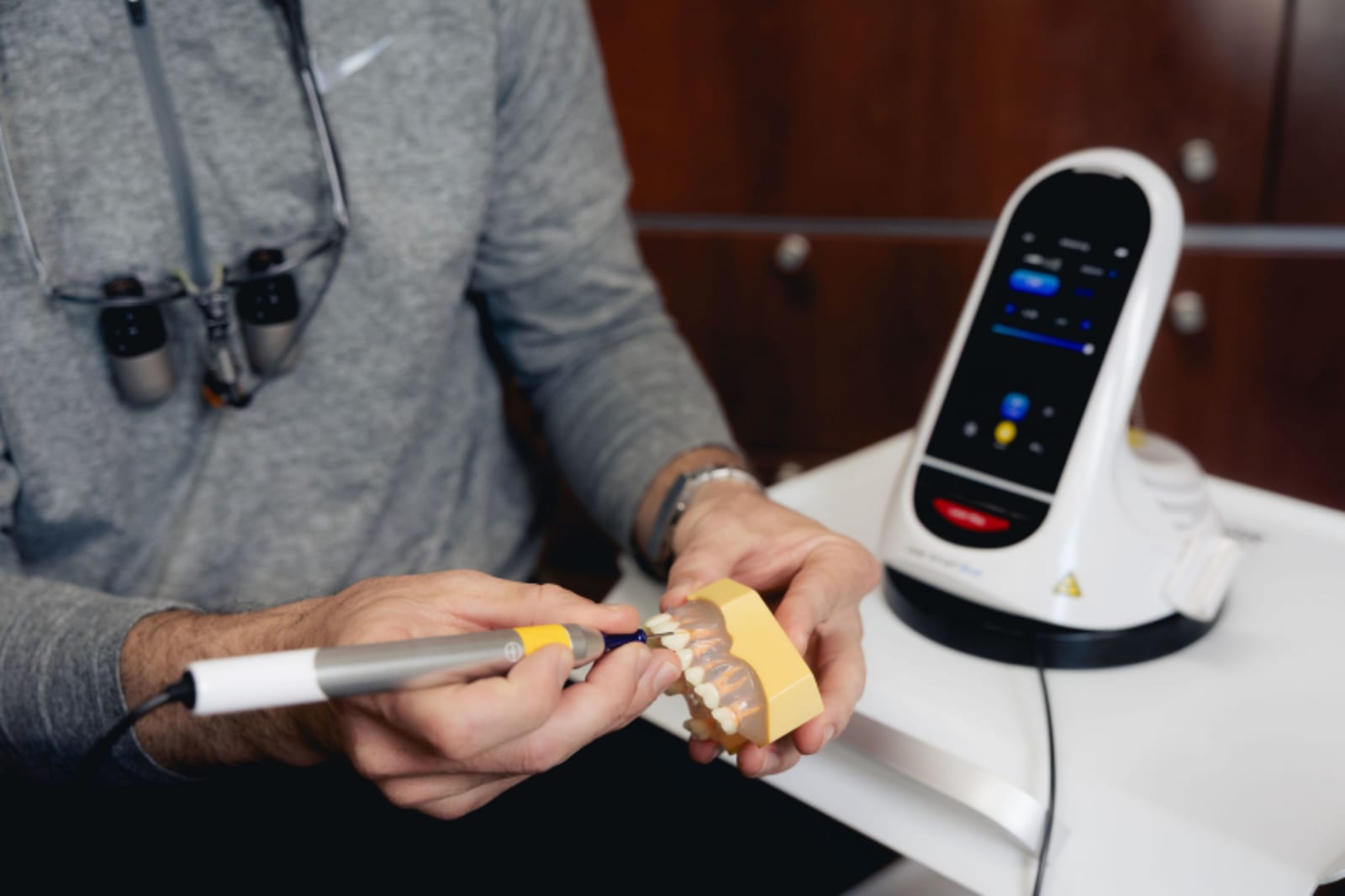
We start by getting a complete picture of what is going on. That means X-rays, a careful exam, photographs, and a look at how your teeth come together when you bite. We also use digital scanning instead of the old impression trays, so no goop, and a much more accurate record. Nothing gets recommended until we have all of that in front of us.
2. Designing your result before we start
Once we have your scans and records, we use them to design what your restorations will look like before any treatment begins. This lets us figure out how much of your natural tooth we need to preserve, where implants would fit best if that is part of your plan, and what your finished bite should feel like. We are working from a real plan, not making it up as we go.
3. A conversation about your options
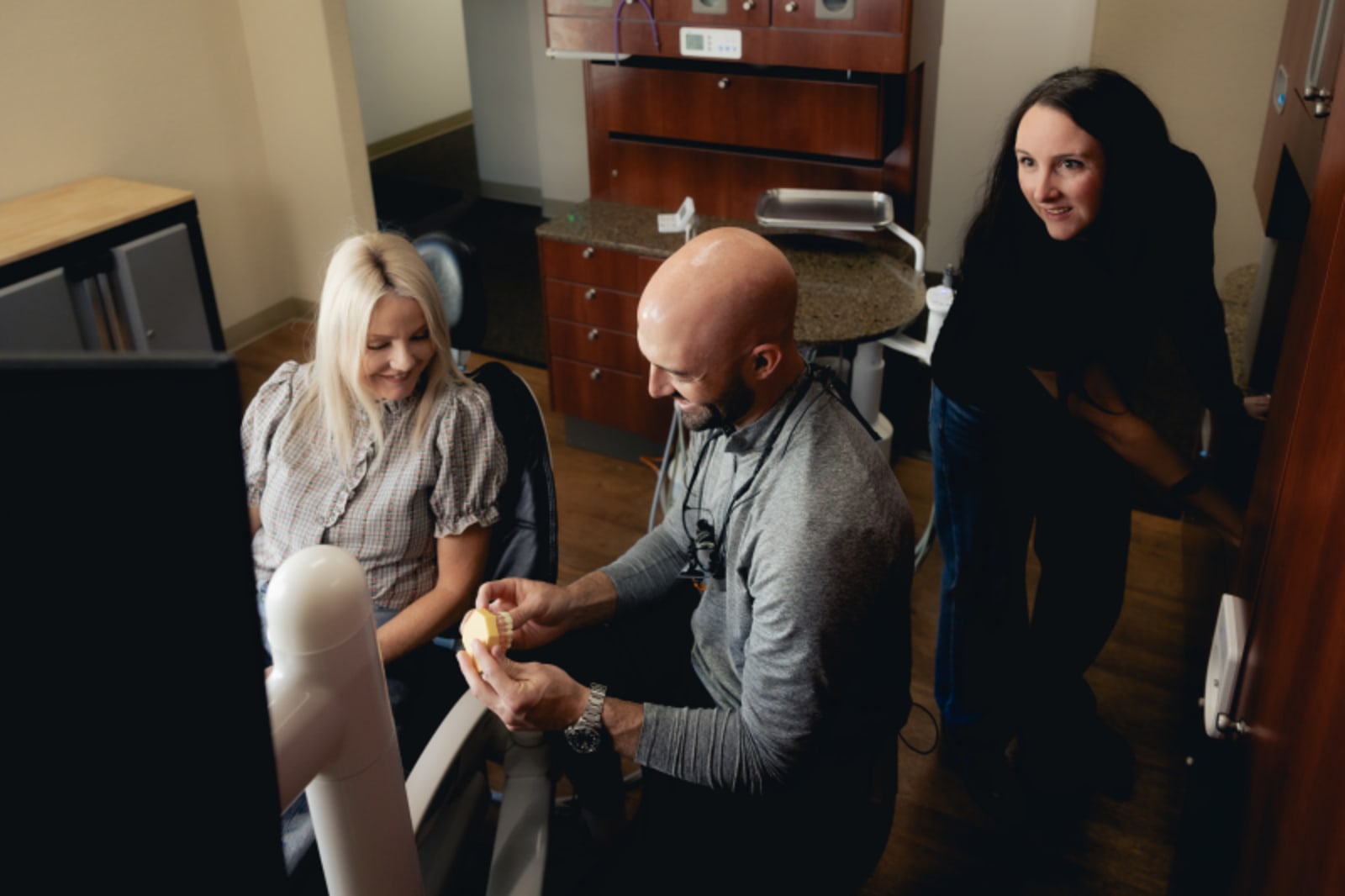
Dr. Kaiser will sit down with you and walk through what he found, what he recommends, and what the alternatives are, including the honest trade-offs. Some options cost more but last longer. Some are more conservative but may need to be revisited down the road. You will also hear what happens if you decide to wait. Then the decision is yours.
4. Taking care of any urgent issues first
If there is active gum disease, decay, or a tooth that cannot be saved, we address that before any rebuilding starts. Think of it this way: putting a new restoration on top of an unhealthy tooth is like painting over a crack in the wall. It will not hold. Getting the foundation right first is what makes the rest of the work last.
5. Rebuilding, one step at a time
When a single crown is needed, we can often make and place it the same day, right here in the office. For larger cases involving multiple teeth, treatment is spread across several visits with clear stopping points along the way. You will always know what is coming next before it happens.
What This Kind of Care Actually Does for You
- Chewing that works again. When your bite is stable and your back teeth are doing their job, eating stops being something you plan around.
- Less strain on the teeth you still have. Missing or worn teeth force the remaining ones to pick up the slack. Getting that load spread evenly again takes the pressure off.
- More of your natural tooth kept intact. Dr. Kaiser's biomimetic approach means we only remove what truly has to go, which keeps more of your options open down the road.
- Restorations that fit the way they should. Digitally designed and milled restorations fit precisely, which makes a real difference for comfort, how easy they are to keep clean, and how long they last.
- Appearance that follows function. Once your bite and overall health are in a good place, shape, shade, and proportion get designed as part of the same plan, not added on as an afterthought.
- Easier daily upkeep. Old, failing restorations tend to trap plaque. New, well-fitted ones are simpler to clean at home and easier for us to keep an eye on at your checkups.
Who Restorative Dentistry Is Meant For
Complex restorative treatment tends to be the right conversation when:
- Several teeth are broken, cracked, or missing and the problems feel too tangled to tackle one at a time.
- Older crowns, bridges, or fillings are failing, leaking, or just not fitting the way they should anymore.
- Years of wear or grinding have shifted how your teeth come together, and things just do not feel or function the way they used to.
- You have been away from the dentist for a while and honestly are not sure where things stand. That is more common than you might think, and there is no judgment here.
That said, it is not always the right first step.
If only one or two teeth are the issue and the rest of your mouth is in good shape, something simpler like a single crown, an onlay, or a filling may be all you need. We will tell you that honestly rather than building out a bigger plan than necessary.
If gum disease is the main problem, that gets addressed first, because treating it can actually change what restorative work makes sense afterward. And if you are missing many teeth, options like dentures, implant-supported dentures, or All-on-Four, a full-arch restoration supported by implants, may be a better fit than trying to restore teeth that are too far gone.
Dr. Kaiser will talk through all of that with you once he has had a chance to look at your records and get a real picture of what is going on.
Timeline: What to Expect
The first visit
This appointment runs longer than a regular checkup, and that is intentional. Dr. Kaiser will take X-rays, photos, and digital scans, evaluate how your bite comes together, and then sit down with you to talk through what he is seeing. Nothing gets recommended until that full picture is in hand.
Between the exam and your plan
After your first visit, there is usually a short window while your case is reviewed and your options are mapped out. When you come back, you will get a clear explanation of what Dr. Kaiser recommends and why, not just a list of procedures, but the reasoning behind the order and the choices.
Stabilization
Before any rebuilding begins, anything that could undermine the work gets addressed first, things like active decay, gum disease, or a tooth that cannot be saved. Most patients move through this phase in one or two visits. If an extraction or bone graft is involved, there will be some healing time, usually a few weeks to a few months. That timeline gets built into your plan upfront so there are no surprises.
Restorative visits
If it is a single tooth, a same-day crown can often be finished in one appointment. Larger cases involving multiple teeth or a full-mouth rebuild are spread across several visits over weeks or months.
Follow-up
Once everything is in place, Dr. Kaiser checks how your bite has settled and makes any small adjustments needed. After that, keeping up with your regular cleanings and exams is what protects the work long-term.
Preparing for Treatment and Caring for the Result
Before you come in, jot down what has been bothering you and roughly how long, and bring any dental insurance information. If you have had work done elsewhere, previous X-rays can be really helpful. And if dental anxiety is part of the picture, mention it when you schedule. Oral conscious sedation is available, and Dr. Kaiser would much rather plan for your comfort ahead of time than find out about it mid-appointment.
Afterward, some tenderness for a few days is completely normal. Brushing twice daily and flossing or cleaning between your teeth matters more than ever. The spot where a restoration meets your natural tooth is where small problems tend to start if it goes uncleaned.
If you grind your teeth, a nightguard is worth it; it protects everything we just built. Keep your regular cleanings and checkups on schedule so we can catch a small chip or a loose edge early, before it turns into something bigger. And if your bite feels off or something catches when you close, call us. That is usually a quick five-minute adjustment, not a big deal at all.
Paying For Complex Restorative Dentistry
There is no single price for complex restorative dentistry, because no two mouths need the same work. What you end up paying depends on how many teeth are involved, whether extractions, grafting, or implants are part of the picture, the materials used, and whether treatment happens all at once or spread across a few phases.
Before anything starts, you will see a detailed estimate, so you know exactly what you are agreeing to. We will also go through your dental insurance benefits with you, since coverage for restorative work varies quite a bit from plan to plan, and we will talk through payment options for anything insurance does not cover.
If spreading treatment out over time makes more sense for your budget or schedule, that is a completely reasonable path, and we will help you figure out which parts need to come first.
Why Patients Choose Pacific Rim Dental For Restorative Dentistry
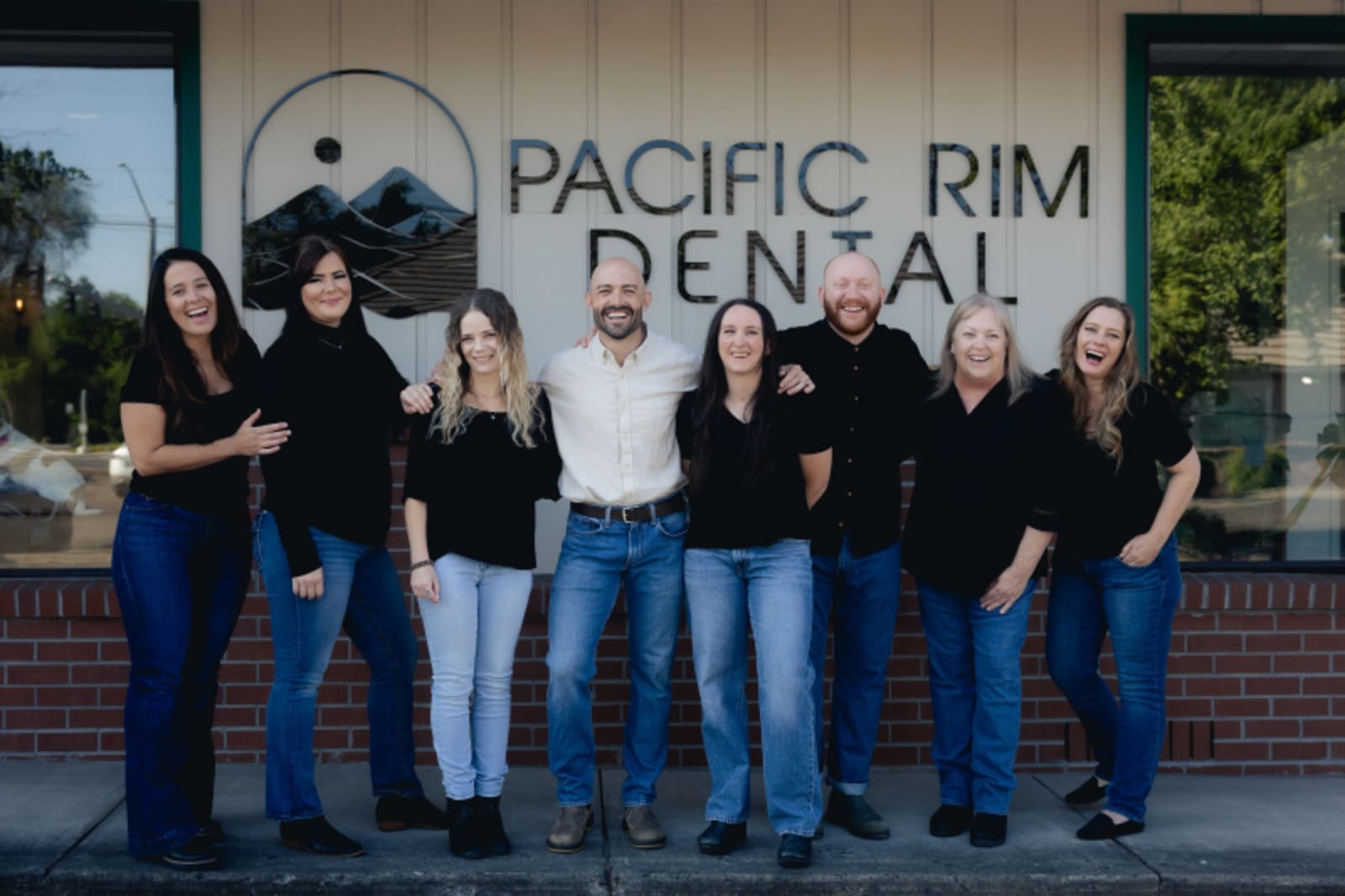
Dr. Trenton Kaiser, DMD grew up in Eagle Point and came back to Southern Oregon because this is home. He studied chemistry at Southern Oregon University, earned his DMD at Midwestern University in Arizona, and received Dean's awards in both digital and implant dentistry before returning to practice here. Pacific Rim Dental is locally owned, not a corporate chain, and that makes a real difference in how your appointments feel and how much time is actually spent with you.
The thing patients bring up most often is how well things get explained. Complex treatment can feel overwhelming quickly, and Dr. Kaiser makes a point of walking you through what he found, what your options are, and what the trade-offs look like, in plain language rather than dental shorthand. If a simpler approach is genuinely the right call, that is what you will hear.
Most of the technology needed for complex cases lives right here in the office. That means same-day crowns can be designed and milled while you wait, and implant restorations can be planned digitally with precision before anything is placed, with no referrals to outside labs or specialists for the core work.
Extractions, grafting, implants, gum treatment, and dentures are all handled here, so your care stays coordinated under one roof with one doctor who knows the full picture.
Frequently Asked Questions
How do I know if I need complex restorative work or just a few fillings?
Honestly, you probably cannot tell from the outside, and that is okay. It comes down to how many teeth are involved, how much of the tooth structure is still healthy, and whether your bite has shifted over time. The exam, X-rays, and bite evaluation give Dr. Kaiser a clear picture, which is why nothing gets recommended until those are done. A lot of patients who come in expecting the worst find out they need far less than they feared.
Can it all be done in one visit?
Sometimes, yes. If it is a single tooth, a same-day crown can often be designed, milled, and placed in one appointment. But when multiple teeth are involved, the work is spread across several visits on purpose, so your mouth has time to heal between steps and Dr. Kaiser can check that everything is fitting and feeling right before moving on. Trying to rush through complex work is one of the main reasons it fails.
Will restorative care hurt?
The treatment itself is done with local anesthetic, so the area being worked on is numb. Most patients are surprised by how comfortable the appointment actually is. Afterward, some soreness for a day or two is normal and usually handled fine with over-the-counter pain relief. If dental anxiety is part of the picture for you, oral conscious sedation is available. Just mention it when you call so we can plan ahead.
Do I have to commit to the whole plan at once?
No, and most people do not. It is very common to spread treatment out over time, whether that is because of budget, scheduling, or simply needing time to heal between steps. Dr. Kaiser will be upfront about which parts genuinely need attention soon and which can wait, including what the real risk is of waiting, so you can make that call with the full picture in front of you.
How long will the restorations last?
It depends on a few things: the material used, where in your mouth the restoration sits, whether you grind your teeth, and how well it gets cleaned and checked over the years. Well-made crowns, bridges, and onlays routinely last many years when they are cared for properly. Anyone who gives you one flat number without knowing your situation is guessing.
Will my restored teeth look natural?
That is absolutely the goal. Digital design lets Dr. Kaiser plan the shape, shade, and proportion of your restorations before anything is made, so there are no surprises. The approach is always to get your bite stable and your teeth healthy first, because cosmetic results built on a shaky foundation do not last.
Let's Start With a Conversation
If you are not sure what your mouth needs, that is a perfectly reasonable place to start. You do not need to come in with a plan, a decision, or a number in mind.
Just come in, let Dr. Kaiser take a good look, and we will walk through what we find together, in plain language, with every option explained honestly. Then you decide what happens next.
We are at 940 Ellendale Dr, Suite 101 in Medford, and we are welcoming new patients. Give us a call at (541) 779-9059 and we will get you on the schedule.
Enjoy a better dental experience
Please call (541) 779-9059 or request an appointment online to set up your first visit. We’ll be in touch soon.